
The Motorcycle Effect

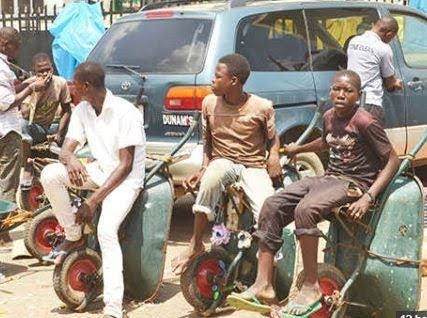
I work as an iron rod merchant, and we often rely on trucks of different capacities to transport our goods to customers’ sites, depending on the quantity involved. However, for smaller quantities within a short radius of about 5 to 20 kilometers, we usually make use of wheelbarrows because they are a cheaper alternative to trucks.
If you ply Lagos roads, you will often find wheelbarrow pushers stationed around major bus stops, waiting to help passengers move their luggage. However, the wheelbarrow operators on my side focus exclusively on transporting iron rods. As a manager, I enjoy a good relationship with most of them, although some are naturally closer to me than others.
Two of such men were Abdul and Mukhtar. They came from Katsina in Northwestern Nigeria. Like many others, they traveled to Lagos to earn a living and send money home to their families—wives, children, and relatives—while occasionally returning home themselves. I enjoyed working with Abdul and Mukhtar because they were kind, respectful, and understanding.
One fateful day, I was taking a stroll when a motorcycle pulled up in front of me. It was Mukhtar.
“Good afternoon, Oga David,” he greeted.
Surprised, I asked, “Mukhtar, what’s going on?”
He then broke the news to me. He had been given a motorcycle to make weekly deliveries for its owner.
Although I knew I would miss him, I was equally excited for him and wished him success in his new pursuit.
One thing I soon realized was that as soon as Mukhtar got the motorcycle, his close friend Abdul also became restless. I noticed a sudden lack of enthusiasm for pushing his wheelbarrow. One day, I asked him what was going on, and he told me he also wanted to leave the wheelbarrow business and become a motorcyclist, which he saw as an upgrade. He even suggested that I get him a motorcycle, promising to make consistent weekly remittances until it was paid for.
At first, I thought it was merely a passing desire and that he would eventually get over it. I was wrong.
Abdul became so committed to his quest for an upgrade that he spoke to everyone he believed might be willing and capable of helping him acquire a motorcycle. Before long, he was fortunate enough to get one. He transitioned from being a wheelbarrow pusher to a motorcyclist and moved on to a new phase of life.
With both Abdul and Mukhtar gone, I had to make do with the other familiar faces—about four of them—who were still available to assist with our deliveries.
Recently, however, a colleague at the office observed that most of the wheelbarrow operators we once knew were no longer around. She had begun encountering many of them riding motorcycles instead.
As much as this felt like a loss to us—since we now had to familiarize ourselves with new arrivals from the North who were filling the vacuum left behind by those who had become motorcyclists—I could not help but recognize an important lesson from the experience.
Sometimes, all it takes is for one person to break through a cycle for others to become aware of the possibilities available to them.
For years, many of these men were content pushing wheelbarrows and earning just enough to get by, believing that was the best opportunity available to them in Lagos. Then Mukhtar got a motorcycle, and suddenly a new possibility emerged. They saw someone who looked like them, came from where they came from, and shared similar circumstances achieve something more. That single example awakened a desire for growth.
What changed their lives was not merely the availability of motorcycles, it was the realization that advancement was possible. Once that belief took root, they began pursuing a different future with determination until it became their reality.
Dear friends, the truth I wish to leave you with tonight is that people often do not need more opportunities as much as they need evidence that greater opportunities are within reach. In many cases, one person’s breakthrough becomes the bridge that helps others cross into a better future.
So profound ❤️💯